Champ Rugby
History of: Cambridge Rugby Club

By Champ Rugby
September 10 2025
A potted history of Cambridge Rugby Club
Cambridge Rugby Club: A Century of Grit, Community, and Ambition

There’s something timeless about a rugby pitch on a crisp Cambridge morning. Beneath the glow of floodlights at Volac Park—also known as Grantchester Road—Cambridge Rugby Club, affectionately known as “The Blood & Sand,” embodies a potent blend of heritage, ambition, and heartfelt community spirit. Since its founding in 1923 by a local group led by Rev. H. K. P. Smith, the club has grown from humble beginnings into one of the premier rugby institutions in the Eastern Counties.
Roots Beneath the Willows
The fledgling club’s first triumph, a 20–0 victory over Norwich, ignited the fire that continues to burn nearly a century later. Situated just over a mile south-west of the city centre, Grantchester Road has served as the club’s home since around 1949. It currently supports up to 2,200 spectators, including 200 seats in its clubhouse grandstand.
From Grassroots to Championship
Over the years, Cambridge RFC has cultivated a layered and inclusive path for players of all ages:
Senior Teams: The club fields three squads—an elite national league (RFU Championship) side, a development team, and a social squad—offering competitive rugby at every level.
Youth Section: Dating to the early 1970s, its mini and junior arm is among the oldest in the country, nurturing players from as young as four up to Under-18.
A standout legacy: club legends like Dickie Jeeps, Andy Hancock, Ben Spencer, Fraser Dingwall, George Furbank, and Alex Goode—who played all his junior rugby at Cambridge—rose to earn international honours.

Scaling the Ranks: A New Chapter
After 18 steadfast seasons in the National Leagues, Cambridge earned promotion to the RFU Championship in 2022–23. In their debut season in England’s second tier, they finished 11th—a noteworthy achievement.
One particularly momentous night came last December when they secured their first Championship victory in dramatic fashion against London Scottish. A game that began poorly turned on its head with a 90-metre try and a nerve-jangling conversion—a victory that the Director of Rugby, Richie Williams, described as a testament to the team’s character and “killer instinct.”
To bolster talent development, the club launched the 1923s, a new pathway side led by head coach Ben Scully. Drawing on an already strong regional base, this squad plays a mixture of local and traditional fixtures and provides more accessible progression routes.
Innovation plays a big part in the club’s DNA. During the 2018–19 season, Cambridge adopted satellite GPS wearable devices to monitor players’ performance and workloads. This move—supported by a sponsorship—led to eight more wins the following season and fewer muscle injuries. Youth players at the academy also benefited: they could use the data both for performance insights and in cross-disciplinary learning, blending sport with science and maths.
Community at the Heart
Cambridge RFC's DNA is built around community. The club supports over 400 mini and youth players and continues to cultivate connections that go beyond rugby. In 2022, a partnership with Nuffield Health Cambridge Hospital provided enhanced medical access and physiotherapy support—deepening their community ties.
During pandemic lockdowns, the club launched community schemes providing healthy meals and technology support to vulnerable children and care residents.
The club’s reputation earned them the honour of hosting England age-grade internationals: England U-20s and U-19s played fixtures at their Ellgia Fields ground, a recognition of their facilities and community ethos.
What Lies Ahead
As Cambridge grows into its Championship role, it continues to balance performance with inclusivity and innovation. From its tech-forward training philosophy to the growth of the 1923s and expanding community initiatives, the club’s journey is one of evolution without sacrificing heart.
Cambridge Rugby Club isn’t just surviving—it’s playing, innovating, and thriving, all while staying firmly rooted in the community that gave it life.
Here’s a deeper dive into the youth programme at Cambridge Rugby Club
A vibrant, inclusive, and strategically structured engine for developing young rugby talent from toddlers to potential senior players.
A Playground with Purpose: Mini & Youth Foundations
Age-Inclusive from the Start: The club offers rugby coaching for children from as young as 18 months (Little Scrummers) up to 18 years old (Colts), including both boys and girls sections—from U7 through U18s.
A Long Legacy: The Mini & Youth section has one of the longest-standing youth rugby programmes in the region, originally launching in January 1975 with just 60 boys. Today it regularly supports over 350 participants across 12 age groups—including expanding girls’ teams at U13, U15, and U18 levels.
Core Ethos: At its heart, the youth programme is about enjoyment. Children learn key values—Respect, Teamwork, and Loyalty—while having fun on Sunday mornings, often followed by a classic bacon roll in the clubhouse!

Bridging Ages: Structure & Inclusivity
Mixed-Gender Play: Up to Under-12s, boys and girls play together, promoting inclusivity from an early age.
Clear Age Progression: The programme follows RFU regulations with age determined by their age on 31 August, aligning with school years—mixing fun and structured learning as children advance through age groups.
Coaching That Connects
Intergenerational Coaching: Coaching duties are shared among ex-players, dedicated parents, and current first-team players and coaches. This multi-layered mentoring brings technical skill, club identity, and a tangible connection to senior rugby.
Leadership Pipeline: The Mini & Youth section has also served as a base for developing club leadership. Several recent club chairmen and a president began their journey supporting or coaching in youth rugby.
Pathways to the Top
Development Roles Anchoring the Path: In 2020, Ben Penfold, originally head of community, was appointed as Rugby Development Officer. His focus includes elevating both youth coaches and players—ensuring that youth share coaching philosophies with first-team staff.
Overarching Roadmap by Club Leadership: Director of Rugby Richie Williams emphasizes a cohesive structure—from minis to academy to the senior team—through webinars, coach alignment, and strategic planning.
Structured Player Pathways: Earlier, Simon Leader had proposed a staged "Aspirational Player Pathway":
Train to Learn & Explore: U7–U12
Train to Play: U13–U15
Train to Perform: U16–U18
Senior Academy (18–23): Mimicking professional club models
The Rise of the 1923s & Academy System
1923s Development Squad: Launched during the club's centenary in 2023, the “1923s” team provides young, aspirational players across Eastern Counties a clearer path to senior rugby—blending local and traditional fixtures under coach Ben Scully.
Enhanced 1923 Academy (2025): Ahead of the 2025–26 season, the club elevated this concept into an elite development programme for players aged 14–18. It includes high-performance training, strength & conditioning, nutrition, performance analysis—designed to create a pure pathway to 1st XV rugby.
Support Beyond the Pitch: Financial Access & Community Outreach
Youth Charitable Trust (2008): Established to remove financial barriers for young participants through grants, this Trust ensures every child up to age 20 can access rugby and club activities—regardless of their family’s economic situation.
Cambridge Sports Development Foundation (CSDF): Formed in 2019, CSDF extends the club’s reach by promoting rugby (and physical activity more widely) in schools, special needs settings, and youth organisations. It emphasises the values of rugby (TREDS: Teamwork, Respect, Enjoyment, Discipline, Sportsmanship) across community development.
In Summary
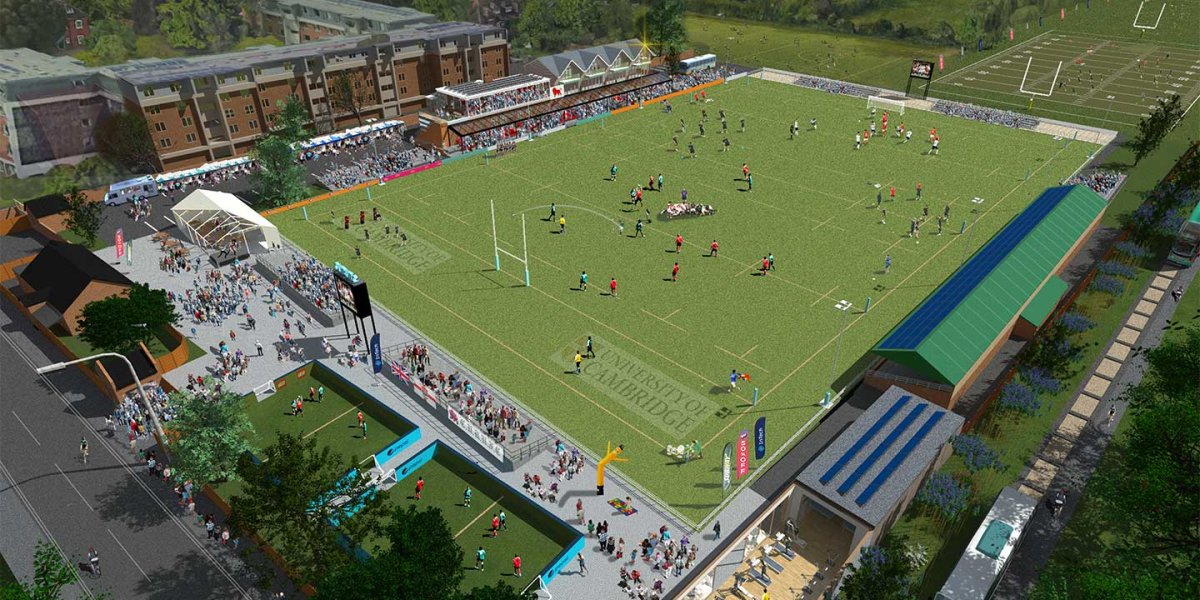
Cambridge Rugby Club stands as a beacon of what grassroots rugby can achieve—a well-rooted club where tradition meets innovation, competition aligns with inclusivity, and community remains at its core.
The Club’s Mini & Youth Programme excels through its holistic design—fun, inclusive, values-focused, and strategically aligned with senior performance. It’s rooted in history yet always evolving, expanding opportunities through trust funding, structured coaching, and elite player development initiatives. Whether a toddler in Little Scrummers or talent in the 1923 Academy, every child has a chance to thrive, connect, and aim high.
 Digg
Digg Delicious
 Facebook
 Reddit
 Stumbleupon
10/09/2025 16:33
If you do not already have an account Click here to Register.
Edited 1 time(s). Last edit at 2025:09:21:18:57:34 by Champ Rugby.
" SEMPER BELLATOR "